

Reason for Choosing USA
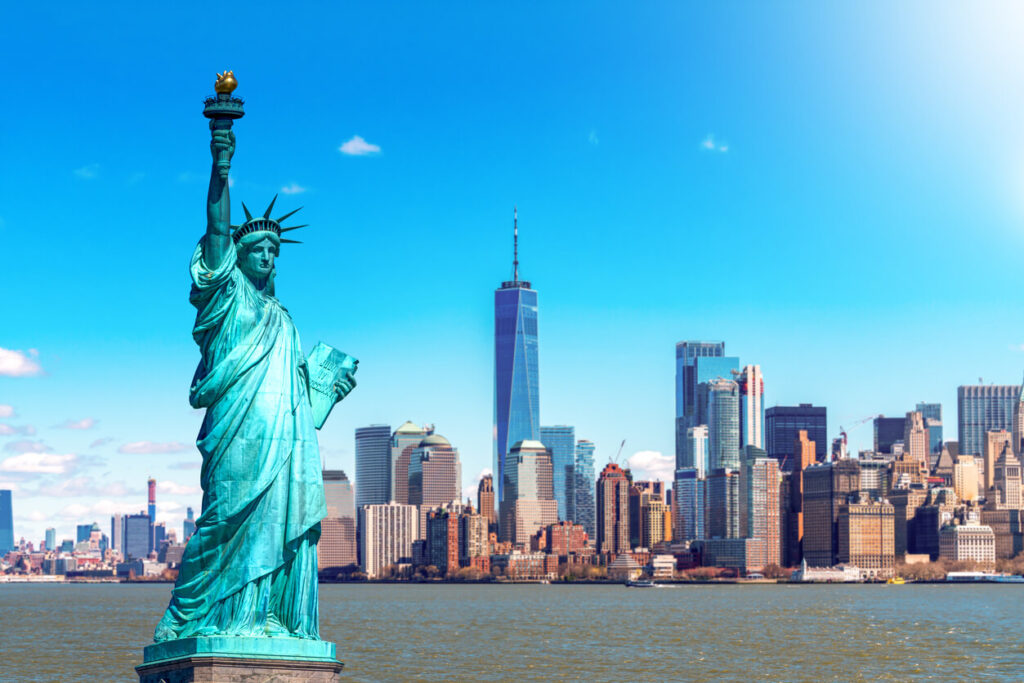
The United States is widely regarded as one of the most sought-after destinations for higher education worldwide. Its education system emphasizes innovation, research, and practical learning, enabling students to develop skills that are highly valued at a global level. Each year, a large number of students from different parts of the world choose the US to pursue their academic and career goals.
Educational institutions in the United States focus on more than just awarding degrees; they help students build critical thinking abilities, leadership skills, and professional confidence. Studying in the US also offers exposure to diverse cultures and perspectives, which plays a significant role in personal and academic development. As a result, pursuing education in the United States proves to be a valuable long-term investment, offering strong academic, social, and career-related benefits.
Education System
The higher education system in the United States offers students the opportunity to pursue various academic levels. During their studies, students can earn degrees ranging from an Associate’s degree to a Bachelor’s, Master’s, and Doctorate, depending on their educational and career goals.
Thousands of higher education institutions operate across the United States, and a key feature of the system is that these institutions are not governed by a single centralized authority. Instead, they are accredited at the national or regional level to ensure educational quality and standards.
There are several types of institutions available for higher education in the United States, including public universities, private universities, two-year colleges, and technology-based institutions.
Each of these institutions offers a unique academic environment and teaching methods. As a result, students have the freedom to choose the educational path that best suits their abilities, interests, and future career aspirations.
USA Student Visa
Leading USA Student Visa Services in Ahmedabad with Trusted Guidance and Expert Advice

FAQs for Students Planning to Study in the USA 2026
1. Is studying in the USA in 2026 worth it?
Yes. The USA remains a top study destination due to its world-class universities, advanced research facilities, flexible education system, and strong career opportunities.
2. Why do Indian students choose the USA for higher education?
Indian students prefer the USA for its globally ranked universities, wide course options, cutting-edge technology programs, excellent research exposure, and high employability after graduation.
3. What are the most popular courses to study in the USA?
Popular programs include Computer Science, Data Science, Artificial Intelligence, Business Analytics, Engineering, MBA, Healthcare, Biotechnology, and Finance.
4. Can I get admission to US universities with low academic scores?
Yes. Many universities evaluate the overall profile including SOP, Letters of Recommendation (LORs), work experience, projects, and extracurricular achievements—not only academic marks.
5. Is IELTS compulsory to study in the USA?
Not always. Universities may accept IELTS, TOEFL, Duolingo, PTE, or waive English tests based on Medium of Instruction (MOI) or prior education in English.
6. Are gap years accepted by US universities?
Yes. Gap years are acceptable if you provide a clear explanation supported by work experience, certifications, internships, or valid personal reasons.
7. Can international students work while studying in the USA?
Yes. Students can work up to 20 hours per week on-campus during academic sessions and full-time during official breaks.
8. What is CPT and OPT in the USA?
CPT (Curricular Practical Training): Work authorization during studies related to your course.
OPT (Optional Practical Training): Post-study work permission for 12 months, with a 24-month extension for STEM courses.
9. How much bank balance is required for a US student visa?
Students generally need to show funds covering one year of tuition fees plus living expenses as mentioned in the I-20 form.
10. Which visa is required to study in the USA?
Students must apply for an F-1 Student Visa.
11. Is an education loan mandatory to study in the USA?
No. Education loans are optional but commonly used to manage high tuition costs and strengthen financial proof for visa approval.
12. Are scholarships available for international students in the USA?
Yes. Universities offer merit-based scholarships, assistantships, fellowships, and tuition waivers, though competition is strong.
13. Can I change my university or course after getting a visa?
Yes. Students can change universities or programs, but they must follow SEVIS rules and update their I-20 accordingly.
14. Does studying in the USA guarantee Permanent Residency (PR)?
No. PR is not guaranteed, but US education combined with OPT, H-1B sponsorship, and work experience can improve long-term settlement chances.